

Travel Insurance For South Africans
Travel insurance for South Africans is not optional. Your South African medical aid covers you within the country’s borders. The moment you board an international flight, that cover either falls away entirely or becomes so limited that a single medical emergency can cost you more than a year’s salary.
A week in a US hospital without insurance can easily run to R500,000 or more. Emergency medical evacuation from a remote destination can cost R300,000 on its own. These are not worst-case theoretical figures. They happen every year. Every South African traveller faces this risk every time they leave the country.
The good news is that the right travel insurance policy protects you from that exposure for a relatively small premium. I’ve seen clients sleep well on long-haul flights because they knew they had cover sorted. This guide walks you through what travel insurance covers, what it excludes, which policy type suits your situation, and how to choose and use a policy confidently.
Travel is also a spending decision that touches your broader financial picture. If you want context on how to integrate larger financial decisions, including travel, into a long-term plan, the article on retirement planning financial advice is a useful starting point.
What Travel Insurance Is and What It Covers
Travel insurance is a short-term policy that protects you against financial losses arising from unexpected events before or during a trip. Most comprehensive policies group their cover into six broad categories:
- Emergency medical and hospitalisation: Pays for treatment if you fall ill or are injured abroad, including hospital stays, surgery, and specialist consultations.
- Emergency medical evacuation and repatriation: Covers the cost of transporting you to the nearest appropriate medical facility or flying you back to South Africa if medically necessary.
- Trip cancellation and curtailment: Reimburses prepaid, non-refundable travel costs if you have to cancel before departure or cut your trip short due to a covered reason such as illness or a family bereavement.
- Baggage loss and delay: Compensates you for lost, stolen, or delayed luggage, and for essential items you need to buy while waiting for delayed bags.
- Personal liability: Covers legal costs and compensation if you accidentally injure someone or damage property while travelling.
- Travel delay: Pays a daily benefit or covers additional accommodation and meal costs if your flight is delayed beyond a specified threshold.
Cover limits matter enormously, and this is where South African travellers face a structural disadvantage. Because limits are often quoted in US dollars or euros, rand depreciation erodes their real value over time. A policy with a USD 100,000 medical limit that looked generous five years ago may feel modest once you price a US medical bill today. Always check the rand equivalent at current exchange rates before assuming a limit is adequate.
Before you travel to the United States specifically, the article on what South Africans should know before travelling to the United States covers additional practical considerations worth reading.
Why Travel Insurance Matters More for South Africans Than for Many Other Nationalities
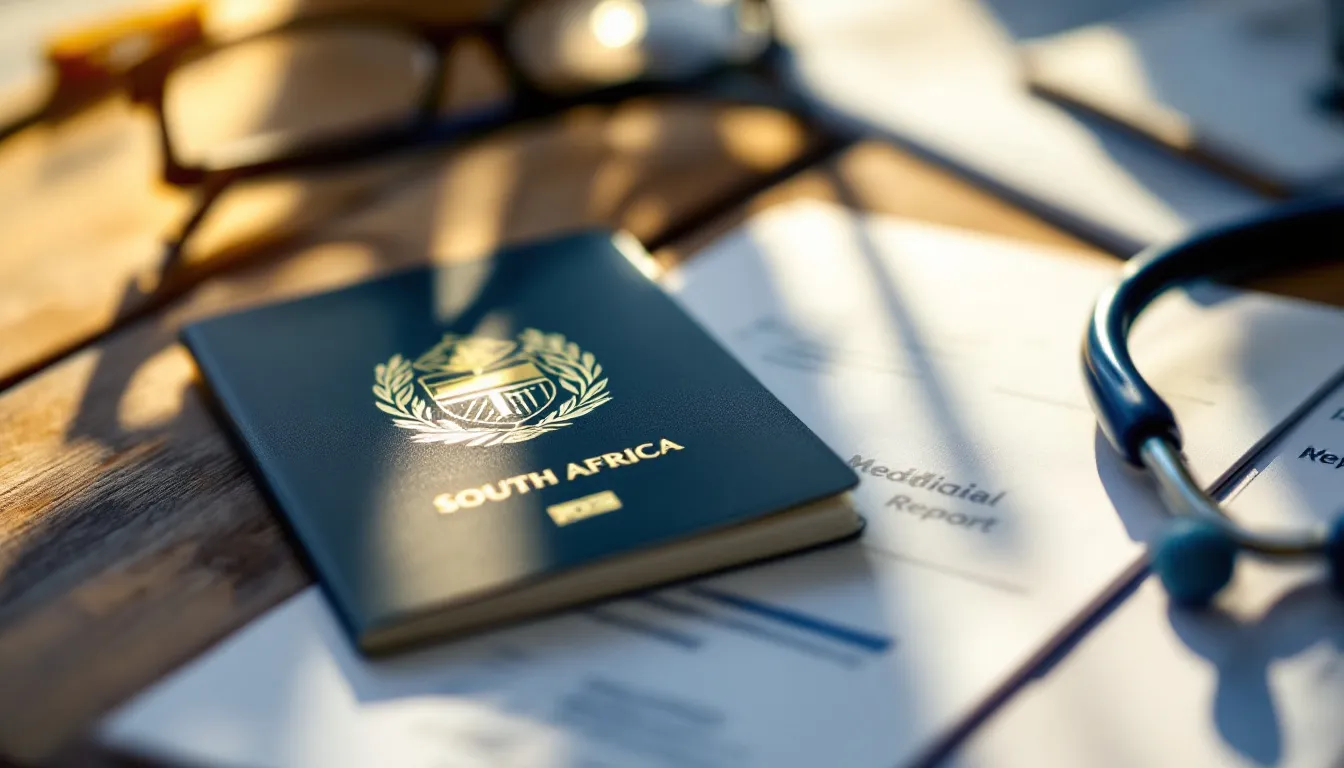
South Africans carry a specific set of financial vulnerabilities when they travel abroad, and those vulnerabilities make travel insurance more critical here than in many comparable countries.
The first issue is currency. When your emergency medical bill is settled in dollars or euros and you are earning and saving in rand, the exchange rate turns a manageable foreign cost into a catastrophic local one. A EUR 50,000 hospital bill in France currently translates to roughly R1,000,000, depending on the rate at the time. That figure can hollow out savings it took years to build. I’ve advised clients who faced exactly this situation, and the financial impact extended well into their retirement.
The second issue is medical aid. Most South African medical aid schemes provide limited or no overseas cover beyond a small emergency benefit, and even where emergency benefits exist, they typically cap out at amounts that fall far short of what a serious illness or accident costs in Europe or North America. If you are a GEPF member, your Government Employees Medical Scheme (GEMS) cover faces the same limitations once you cross the border. Do not assume your employer-provided medical cover travels with you in a meaningful way. Call your medical aid administrator before you travel and confirm what you have in writing.
The third issue is the absence of reciprocal healthcare agreements. Countries like the United Kingdom, Australia, and several EU member states have bilateral health agreements with each other that grant nationals access to public healthcare. South Africa has no such agreements with most popular travel destinations. You pay full private rates from the first consultation onwards.
These three factors combined mean that a travel medical emergency is far more financially damaging for a South African than for, say, an Australian or a Swedish traveller. Getting the right cover in place before you leave is a straightforward step. Speaking to a financial adviser before major financial decisions that involve significant personal risk is equally worthwhile.
Types of Travel Insurance Policies Available to South Africans
South African travellers can choose from several policy structures. The right one depends on how often you travel, who travels with you, and whether your existing cover has gaps.
Single-Trip Cover
Single-trip policies cover one journey from departure to return, and they are ideal if you travel once or twice a year. You select your destination region and travel dates, and the policy is priced accordingly. This is typically the most affordable entry point, and it works well for your occasional beach holiday or once-in-a-lifetime trip.
Annual Multi-Trip Cover
If you travel more than three times a year, an annual multi-trip policy usually works out cheaper than buying single-trip cover each time. Each individual trip is covered up to a maximum duration per journey, typically 30, 45, or 60 days, so check that limit against your travel habits. I see this structure suit clients who take regular work trips or who blend business and leisure travel throughout the year.
Family Policies
Family travel insurance covers two adults and their dependent children under a single premium. This is significantly more cost-effective than buying separate policies for each family member, and it simplifies claims administration when something goes wrong. If you are planning a multi-generational family holiday, check whether the policy includes grandchildren, as some do and others do not.
Top-Up or Supplementary Cover
If your credit card, employer, or medical aid provides basic travel cover, a top-up policy fills the gaps without you paying for cover you already have. This structure suits frequent business travellers whose employer covers standard trips but whose personal leisure travel falls outside that benefit.
Shari’ah Compliant Travel Insurance
Shari’ah compliant travel insurance operates on a takaful model, where contributions are pooled and participants share risk rather than transferring it to an insurer for profit. South African Muslims who want their financial products to align with their values should ask providers specifically whether their travel product is structured on takaful principles. The number of providers offering this in South Africa remains limited, so it requires some searching, but the options do exist. Understanding financial products that protect you over time can help you think about risk and protection products more broadly.
Common Exclusions You Must Understand Before You Buy
Travel insurance is only as useful as you understand it to be. Policies contain exclusions that trip up many South African travellers, and reading the fine print before you leave matters. I have seen clients make claims that were denied because they missed a single word in the exclusions section. Do not let that be you.
The five exclusion categories you must check are:
- Pre-existing medical conditions: Most standard policies exclude claims arising from conditions you had before the policy started, unless you declared them and paid an additional premium for cover. Travel with a managed condition like diabetes or hypertension without declaring it, and your insurer will deny the medical claim, leaving you to bear the full cost. The word “declared” is crucial here. Tell the insurer upfront.
- Undeclared high-risk activities: Adventure sports such as scuba diving, skiing, motorcycling, or bungee jumping are routinely excluded from standard policies. If your trip includes these activities, you need to either add a sports rider or buy a specialist adventure policy. A R50,000 premium increase beats a R500,000 hospital bill.
- Alcohol and substance-related incidents: If your claim arises from an incident where you were intoxicated, your insurer will deny the claim and you will bear the full cost. This exclusion is broadly worded in most policies, and the burden of proof is on you to demonstrate sobriety.
- Travel to destinations under active government warning: The South African Department of International Relations and Cooperation issues travel advisories. Many insurers will not pay claims for incidents in destinations where a warning was in place when you departed. Check the DIRCO website before you book.
- Losses not reported timeously: Most policies require you to report theft or loss to local authorities within 24 hours and to the insurer within a specified window. Fail to meet these timelines and your insurer will deny the claim and you will bear the full cost.
Understanding these exclusions before you buy is not pessimism. It is the same discipline as reading a financial agreement before signing it. The value of getting proper financial advice applies to insurance decisions just as much as investment ones.
How to Choose the Right Travel Insurance Policy as a South African
Choosing a policy involves more than finding the cheapest premium. I have guided clients through this process dozens of times, and the ones who get the best value always follow the same steps. Follow these steps to make sure your cover actually works when you need it.
Start with your destination and trip type.
Medical costs in the United States are significantly higher than in Southeast Asia or neighbouring African countries. A policy with a USD 250,000 medical limit is a reasonable floor for a US trip. For European travel, check that your Schengen visa requirements are met, as most Schengen embassies require a minimum of EUR 30,000 in medical cover. If you are heading to multiple countries, make sure the policy covers all of them.
Audit your existing cover before buying.
Check your medical aid membership guide, your employer travel benefit (if any), and your credit card travel cover before you buy a comprehensive policy. You may already have some cover, and understanding those limits helps you decide whether to buy a standalone policy or a top-up. Call your provider directly if the documentation is unclear. A five-minute phone call now saves hours of frustration later.
Match the policy limits to your actual risk.
A policy with a R500,000 medical limit sounds like a lot until you price a four-day ICU stay in the United States, which can cost that and more. Look for policies with at least USD 100,000 in medical cover for developed-world travel, and ideally unlimited medical evacuation cover. When you see “unlimited” in the schedule, that is a feature worth paying for.
Download and read the policy schedule before you pay.
The policy schedule is the legally binding document. The marketing brochure is not. Read the definitions, the exclusions, and the claims process in the schedule, not the summary. If a term is unclear, call the insurer before you travel, not during an emergency. Most insurers are helpful when you ask questions before you buy. They become less helpful when you are calling from a hospital bed.
Consider your frequency and plan accordingly.
If you travel three or more times a year, the maths almost always favour an annual multi-trip policy. If you travel once, buy single-trip cover specific to your destination and dates. If you are unsure whether you will travel again in the next year, single-trip cover is usually the safer bet.
Choosing the right protection is part of making consistent financial decisions that protect your long-term position. If you want a holistic view of your cover alongside your investments and retirement plan, a conversation with a financial adviser who can review your cover holistically is worth the time.
Special Considerations for Retired South Africans Travelling Abroad

Retirement does not reduce your travel ambitions. For many South Africans, extended international travel is something they have planned for decades. I work with retired clients regularly who spend three or four months a year abroad, and it is one of the great rewards of having planned well. But retiring introduces financial dynamics that make the right travel insurance even more critical.
Your retirement capital is finite. Whether you draw income from a living annuity, a guaranteed life annuity, or a combination of both, an uninsured medical emergency abroad can force you to liquidate assets or increase your drawdown rate at precisely the wrong time. A living annuity, for example, is designed to sustain you for the rest of your life at a sustainable drawdown rate. A large uninsured medical bill can permanently compromise that sustainability. I have seen this happen, and it changes the trajectory of a retirement that had been carefully planned.
Retired travellers also face higher premiums because age is a key pricing factor for travel insurance. Many policies apply age caps or require additional declarations for travellers over 70 or 75. Start the application process early and be thorough in declaring pre-existing conditions. Some insurers offer policies specifically for older travellers, with higher limits but also higher premiums. The trade-off is usually worth it.
Understanding how your retirement income is taxed in South Africa is relevant here too, because any lump sum you must draw to cover an uninsured emergency may trigger additional tax in that year. Separately, the article on guaranteed annuity rates and protecting your retirement income gives useful context on how to think about securing income that cannot be eroded by unexpected costs.
How to Make a Travel Insurance Claim from Abroad
Making a claim while you are abroad is stressful. Knowing the process in advance makes it significantly less so. I always recommend my clients take a photograph of the emergency assistance number and save it in their phone before they leave.
Call the emergency assistance line immediately. Every travel policy includes a 24-hour emergency assistance number. Call it before you make your own medical arrangements wherever possible. Many insurers require pre-authorisation for hospitalisation, and failing to call first can compromise your claim. The insurer’s team can often help you navigate the local healthcare system and find a network provider.
Get a written diagnosis and cost estimate. Ask the treating facility for a formal invoice or cost estimate in writing. Verbal assurances are not sufficient for a claim. If the hospital or clinic resists, explain that you need the documentation for your insurance claim. Most facilities are familiar with this request and will provide it.
Report theft or loss to local police within 24 hours. Get a written police report with a reference number. Without it, your insurer will not process a baggage or personal belongings claim. I know this feels bureaucratic when you are stressed, but it is non-negotiable.
Keep every receipt. Medicines, emergency accommodation, alternative transport, and meal costs during delays all need receipts to be claimed. Take photographs of damaged or lost items where possible. Use your phone camera liberally. A picture of your damaged suitcase and a photo of the repair invoice together tell a complete story.
Notify your insurer as soon as possible. Most policies require notification within 30 days of returning to South Africa for non-emergency claims. Check your specific policy schedule for the exact window. For medical emergencies, the emergency assistance line will have already logged your claim, but follow up with written notification too.
Submit a complete claim file. A complete file includes the claim form, invoices, the police report (if applicable), proof of travel, and your medical diagnosis. Incomplete submissions cause delays. I recommend making a photocopy of everything for your own records and submitting the originals to the insurer.
Documentation is everything in a travel insurance claim. The insurer cannot pay what you cannot prove. This same discipline, keeping records and acting promptly, applies to broader financial planning to protect yourself before and during retirement.
Frequently Asked Questions About Travel Insurance for South Africans
Does my South African medical aid cover me overseas?
Most South African medical aid schemes offer limited or no meaningful overseas cover beyond a small emergency benefit. The amounts are typically insufficient for serious medical events abroad, particularly in the United States or Europe. You should treat your medical aid as a domestic product and arrange separate travel insurance for all international trips. Call your scheme directly to confirm your specific benefit.
Is travel insurance required for a Schengen visa?
Yes. A Schengen visa application requires proof of travel insurance with a minimum medical cover of EUR 30,000 that is valid for all Schengen member states for the duration of your stay. Many South African travel insurers offer Schengen-compliant policies specifically designed to meet this requirement. Check that your policy explicitly states Schengen validity before submitting your visa application.
How much does travel insurance cost for South Africans?
Premiums vary based on age, destination, duration, and cover limits. A healthy adult under 60 can generally expect to pay between R300 and R800 for a week of comprehensive cover to Europe. US-bound policies cost more due to higher medical costs there. Annual multi-trip policies typically range from R2,000 to R6,000 depending on age and the number of covered trips. Get a few quotes and compare the cover limits, not just the premium.
Can I get travel insurance if I have a pre-existing condition?
Yes, but you must declare the condition when you apply. Most insurers will either include the condition with an additional premium, exclude it from cover, or decline the application if the risk is too high. Failing to declare a pre-existing condition and then making a related claim will result in that claim being denied. Honesty upfront is always the right move.
Is domestic travel insurance worth it within South Africa?
Domestic travel insurance is less critical for medical purposes because your medical aid covers you within South Africa. However, trip cancellation cover, baggage protection, and travel delay benefits can still add value for domestic trips, particularly if you have prepaid non-refundable bookings. Assess the cost against the cancellation risk for your specific trip.
For personalised financial advice for South Africans that extends beyond travel, including integrating protection products into a broader retirement plan, consider speaking to a qualified financial adviser.
The Bottom Line on Travel Insurance for South Africans
South African travellers face a genuine and specific financial risk when they leave the country. Your medical aid is built for domestic use. The rand’s exchange rate turns foreign medical bills into enormous local obligations. And South Africa has no reciprocal healthcare agreements with the destinations most South Africans visit.
The solution is straightforward: buy a travel insurance policy that matches your destination, your health, and your trip type before you travel. Read the policy schedule, declare pre-existing conditions honestly, and keep the emergency assistance number accessible at all times.
Travel insurance is one of the most affordable forms of financial protection available to you. Skipping it to save a few hundred rand is a false economy when the downside risk runs into hundreds of thousands. I have never met a client who regretted buying comprehensive travel cover. I have met several who regretted skipping it.
This article is general information only and does not constitute personal financial or insurance advice. For guidance that accounts for your specific circumstances, consult a qualified financial adviser or a licensed short-term insurance broker.
For further reading on building a financially secure retirement and protecting what you have worked for, visit the articles on retirement planning advice for South Africans and finding a financial adviser for retirement planning.