
How the Two-Pot Retirement System Works — What You Need to Know
Home > Blog > How the Two-Pot Retirement System Works — What You Need to Know
				# How the Two-Pot Retirement System Works — What You Need to Know


				###### By  Munaf Mukadam - Gradidge-Mahura Investments


								**WATCH:** South Africa’s retirement landscape is undergoing major change with the new two-pot retirement system. For additional perspectives and a concise breakdown of common questions, check out **[Moneyweb’s detailed FAQ guide](https://www.moneyweb.co.za/financial-advisor-views/watch-two-pot-retirement-system-frequently-asked-questions/).**


				## Introduction


								 South Africa’s retirement landscape changed significantly with the implementation of the **two-pot retirement system** on **1 September 2024**. This reform has generated plenty of discussion—and confusion—among pension fund members, financial advisors, and employers.
This guide aims to break down the new system, highlight important updates, and help you understand how it affects your retirement planning in 2025 and beyond.
				## What Is the Two-Pot Retirement System?


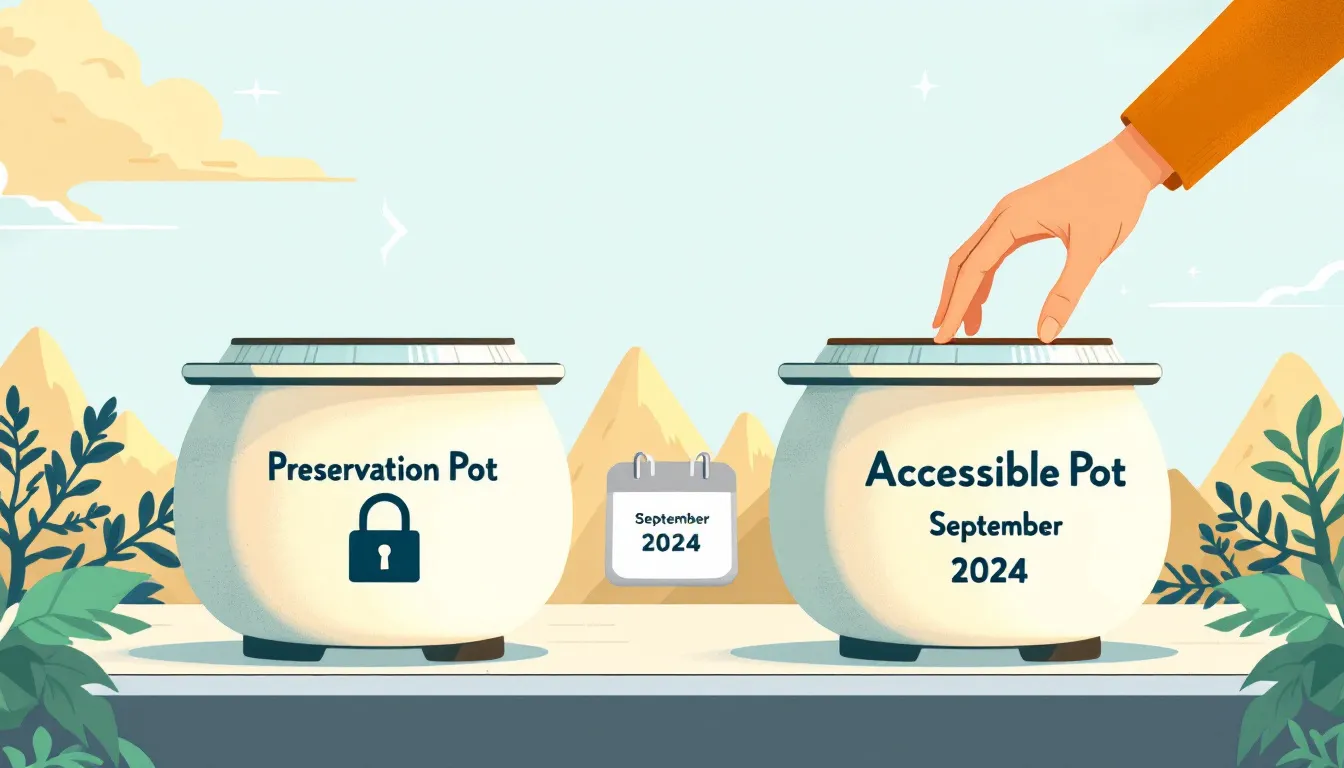
								The **two-pot system** is a new structure for retirement savings in South Africa, designed to improve long-term financial security while offering limited access to retirement funds in times of need.
** Key Objectives:**
-
Encourage preservation of retirement savings
-
Allow limited early access to savings before retirement
-
Improve retirement outcomes for all members
Under the new system, your retirement savings will be split into three components:
Savings Pot – accessible annually (up to a set limit)
Retirement Pot – preserved until formal retirement
Vested Pot – savings accumulated before the new law (preserved under previous rules)
Confused about how the two-pot system works? This short Moneyweb video answers key questions many South Africans are asking ahead of the 1 September 2024 implementation.
				### Why Was This Reform Introduced?


								Before 2024, many South Africans **cashed out their retirement savings** when changing jobs. This reduced their long-term retirement income drastically.
The two-pot system addresses this by:
-
Forcing preservation of part of the savings (retirement pot)
-
Allowing controlled access (savings pot)
-
Promoting better retirement planning habits
Secure Your Retirement with Expert Advice — Book a Consultation Today! [ Book a free consult ](https://retiresmart.co.za/contact-me/) ### How Contributions Are Split Under the Two-Pot System Starting from 1 September 2024: -
One-third of your monthly contributions will go to the savings pot
-
Two-thirds will go to the retirement pot
-
Existing balances remain in the vested pot
This structure ensures that you always have
				### Accessing Your Savings Pot


								The savings pot is the flexible component of the two-pot retirement system. It allows you to make a withdrawal once a year, with a minimum withdrawal amount of R2,000, and any amount taken out will be taxed at your marginal rate. However, there are restrictions: you cannot withdraw less than R2,000, nor can you withdraw more than what is available in the savings pot. Importantly, you cannot access funds in the retirement or vested pots before reaching retirement age, except in specific situations such as retrenchment or emigration.


				## What Happens to Existing Retirement Funds?


								Any savings accumulated **before 1 September 2024** will stay in the **vested pot**. These are subject to **pre-existing withdrawal rules**, which means you might still be able to access them under old provisions.
New contributions after this date fall under the two-pot rules.
				#### Who Does This Affect?


								The two-pot retirement system applies to members of pension funds, provident funds, and retirement annuity funds. However, some groups may be temporarily exempt, including certain legacy provident funds and defined benefit schemes.
Tax Implications
Understanding the tax consequences is crucial. Withdrawals from the savings pot are taxed at your marginal income tax rate, while withdrawals made at retirement follow the retirement tax tables, which can offer more favorable tax treatment if you preserve your funds until retirement. It’s wise to consult a tax professional to help you optimize your withdrawal strategy and reduce tax exposure.
				#### Pros and Cons of the Two-Pot Retirement System


				### Pros:


- Encourages long-term **financial discipline**

- Provides **liquidity** for emergencies

- Reduces early full cash-outs during job changes


				### Cons:


- Annual access is **limited** -
Requires careful planning to avoid misuse
-
May confuse members unfamiliar with investment terminology
## What Happens at Retirement? At retirement, the following applies: -
Retirement Pot: You can take up to one-third as a** lump sum**; the remaining two-thirds must buy an annuity (as per usual rules).
-
Savings Pot: Any balance can be withdrawn as cash (taxable).
-
Vested Pot: Rules remain the same as before the reform.
This ensures that members have some access to cash and a guaranteed income stream post-retirement.
				### What Should You Do Now?


								If you’re a member of a retirement fund, take these steps:

				### Review Your Fund Rules


								The two-pot retirement system is a bold step toward creating more sustainable retirement savings in South Africa. While it brings complexity, it also creates a more balanced approach between access and preservation.


								Check whether your fund has adopted the two-pot system (most will).

				### Speak to a Financial Advisor


The two-pot system introduces complexity. An advisor can help with: - Tax strategy
- Withdrawal planning
- Contribution analysis
- Don’t Panic
Preservation is key to long-term retirement success. Avoid the temptation to withdraw annually unless truly needed.
				## Two-Pot System Update: 2025 Highlights


- The first allowable withdrawal window under the new system opened in **2025** -
National Treasury is monitoring uptake and feedback
-
Stakeholders are pushing for more member education
## Two-Pot Retirement System vs. Old System
Feature Old System Two-Pot System (New)
Early Access Allowed full withdrawal at job change Only savings pot (1/3 of new contributions)
**Retirement Pot Requirement
** One-third cash, two-thirds annuity
Same
Preservation Rules Often ignored Enforced through structure
**Tax on Withdrawals ** Retirement lump sum table Marginal tax on early savings access
**Structure ** Single pool Three pots (vested, savings, retirement)
				## Common Misunderstandings


- **I can withdraw everything every year** — False. Only the savings pot is accessible, and only once per year. -
It replaces my retirement fund — No, it’s a restructuring of how your contributions are managed, not a replacement.
-
I don’t need to worry if I’m young — Early understanding helps build better retirement habits.
## Final Thoughts The two-pot retirement system is a bold step toward creating more sustainable retirement savings in South Africa. While it brings complexity, it also creates a more balanced approach between access and preservation. ## Key Takeaways: - Understand how your contributions are split -
Use the savings pot wisely
-
Leave the retirement pot untouched for long-term growth
-
Get professional financial advice early
By learning how the system works and adapting your planning, you can set yourself up for a stronger financial future in retirement
				## FAQs: Two-Pot Retirement System South Africa


				 1. What is the Two-Pot Retirement System in South Africa?


								The Two-Pot System is a new retirement savings structure starting on 1 September 2024. It splits your future retirement contributions into two parts — one-third into a savings pot (accessible annually), and two-thirds into a retirement pot (only accessible at retirement). Existing savings will go into a third pot called the vested pot.


				 2. Who is affected by the Two-Pot System?


								It applies to members of pension funds, provident funds, and retirement annuity funds. However, some legacy provident funds and defined benefit schemes may be temporarily excluded.


				 3. Can I withdraw money from my savings pot before retirement?


								Yes, you can withdraw once per year, with a minimum withdrawal of R2,000, subject to tax at your marginal rate. You cannot withdraw more than what’s in the savings pot or touch the retirement/vested pots until retirement.


				 4. What happens to my existing retirement savings?


								Your current retirement savings before 1 September 2024 will be placed in a vested pot and will follow the old rules. You won’t be able to withdraw from it until retirement, unless specific exceptions apply.


				 5. How are contributions split under the new system?


From 1 September 2024: -
One-third of your contributions go into the savings pot
-
Two-thirds go into the retirement pot
-
Your current balance remains in the vested pot